
Shipping Infectious Substances by Air
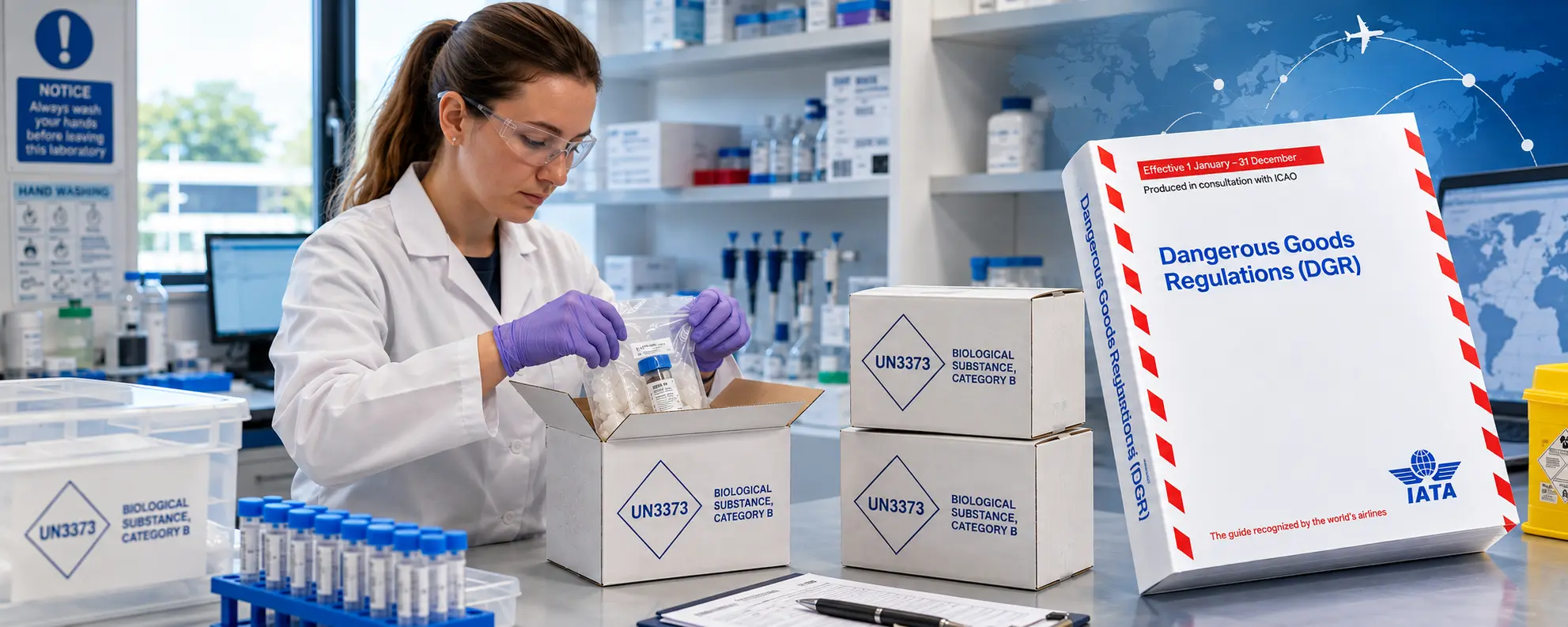
Infectious Substances and Dry Ice by Air Training
CAA approved one day specialist course
Transporting infectious substances, biological samples and clinical specimens by air requires careful classification, packaging, marking and documentation.
RoadSafe Europe’s one-day course provides the specialist knowledge and practical skills needed to prepare infectious substances and associated materials for air transport. It also covers the use of dry ice as a refrigerant. The course was originally written specifically to match the requirements of UK Universities and Bio-tech companies.
The course is approved by the UK Civil Aviation Authority and based on the current IATA Dangerous Goods Regulations. It concludes with an open-book examination and certification for successful candidates.
Course details
- Duration: One day
- Approval: UK Civil Aviation Authority approved
- Regulations: Current IATA Dangerous Goods Regulations
- Delivery: RoadSafe Europe’s Southampton training centre
- On-site delivery: Available throughout the UK
- Assessment: Open-book examination
- Certification: Valid for 24 months
- Course materials: Included
- Price: Contact us for course dates and a quotation
Who should attend
The course is intended for personnel who classify, pack, mark, label, document, check or offer infectious substances and biological materials for transport by air.
Suitable delegates may include:
- Doctors and healthcare professionals
- Hospital and clinic personnel
- Laboratory and diagnostic staff
- Biomedical scientists
- University and research personnel
- Pharmaceutical and biotechnology employees
- Clinical-trial personnel
- Veterinarians and animal-health professionals
- Pathology and forensic personnel
- Public-health organisations
- Medical courier personnel
- Freight forwarders and cargo agents
- Dangerous goods acceptance personnel
Training should reflect the functions each employee performs.
Initial and recurrent training
The course is suitable for employees requiring initial certification and experienced personnel completing recurrent training.
Recurrent training and assessment must normally be completed within 24 months of the previous training. Candidates attending for recurrent training should provide details of their current certificate before the course.
Successful candidates receive a certificate valid for 24 months.
Materials covered by the course
The course covers the principal classifications used when transporting infectious substances and biological samples by air, including:
- UN 2814 Infectious substance affecting humans
- UN 2900 Infectious substance affecting animals only
- UN 3373 Biological substance Category B
- Exempt human specimens
- Exempt animal specimens
- Biological products
- Genetically modified micro-organisms where required
- Clinical and medical waste where relevant
- Dry ice UN 1845
- Small quantities of preservative fluids associated with samples
The course explains how the requirements change according to the material’s classification, the risks it presents and the refrigerant used.
Course content
Regulatory responsibilities
- The legal framework for transporting dangerous goods by air
- Employer and employee responsibilities
- The structure of the IATA Dangerous Goods Regulations
- State and operator variations
- Training and competency requirements
- Security awareness
- Incident and occurrence reporting
Classification of infectious substances
- What constitutes an infectious substance
- Known or reasonably expected pathogens
- Category A and Category B substances
- Substances affecting humans
- Substances affecting animals only
- Assigning UN 2814, UN 2900 or UN 3373
- Exempt human and animal specimens
- Biological products
- Patient specimens
- Medical and clinical waste
- Cultures and stocks
- Genetically modified micro-organisms
- When specialist advice is required
Category A substances
Delegates will learn how to prepare Category A infectious substances assigned to:
- UN 2814 Infectious substance affecting humans
- UN 2900 Infectious substance affecting animals only
Subjects include:
- Selecting the correct Proper Shipping Name
- Applying Packing Instruction 620
- UN specification packaging
- Quantity limits
- Inner, secondary and outer packaging
- Absorbent and cushioning materials
- Pressure requirements
- Marks and hazard labels
- Shipper’s Declaration requirements
- State and operator variations
Category B substances
The course covers the preparation of Biological substance Category B assigned to UN 3373.
Subjects include:
- Applying Packing Instruction 650
- Triple-packaging requirements
- Primary receptacles
- Secondary packaging
- Rigid outer packaging
- Absorbent material
- Pressure and performance requirements
- Quantity limits
- The UN 3373 mark
- Overpacks
- Air waybill information
- Differences between Category A and Category B shipments
Exempt specimens
Not every patient or animal specimen is classified as an infectious substance.
Delegates will learn:
- When the exempt specimen provisions may apply
- How professional judgement affects classification
- Packaging requirements for exempt specimens
- The difference between an exempt specimen and UN 3373
- When a specimen should be treated as an infectious substance
- The importance of documented classification procedures
Packaging requirements
The course explains how to select and prepare packaging suitable for the material and transport conditions.
This includes:
- Triple-packaging systems
- Leakproof primary receptacles
- Leakproof secondary packaging
- Rigid outer packaging
- Absorbent and cushioning material
- Multiple fragile primary receptacles
- Temperature and pressure considerations
- Package testing
- Closures and security
- Overpacks
- Checking packaging before use
- Recognising damaged or unsuitable packaging
Dry ice
Dry ice is commonly used to keep medical and biological samples frozen during transport, but it is itself classified as dangerous goods for air transport.
The course covers:
- Classification as UN 1845 Dry ice
- Hazards associated with carbon dioxide gas
- Safe handling
- Calculating the amount of dry ice
- Packaging ventilation
- Preventing pressure build-up
- Maintaining package integrity after the dry ice has dissipated
- Placement around secondary packaging
- Marks and labels
- Declaring the net quantity of dry ice
- Air waybill requirements
- Use of dry ice in an overpack
- State and operator variations
- Replenishing dry ice during transport
Other refrigerants and preserved samples
Where relevant, the course can also introduce:
- Liquid nitrogen
- Dry shippers
- Cryogenic hazards
- Samples containing small quantities of flammable, toxic or corrosive preservative fluids
- Excepted Quantity provisions
- De minimis provisions
- Packaging compatibility
Additional specialist training may be required for some refrigerants or preserved materials.
Marking and labelling
Delegates will learn how to determine and apply the required:
- UN numbers
- Proper Shipping Names
- Class 6.2 infectious substance labels
- UN 3373 marks
- Class 9 dry ice labels
- Net dry-ice quantity marks
- Orientation arrows
- Shipper and consignee details
- Overpack marks
- Additional handling marks
The course also covers the positioning, visibility and durability of marks and labels.
Documentation
The documentation module can include:
- When a Shipper’s Declaration for Dangerous Goods is required
- Completing the declaration for Category A infectious substances
- Air waybill requirements
- Documentation for UN 3373
- Documentation for dry ice
- Emergency contact information
- State and operator variations
- Recognising common documentation errors
- Record retention
Practical exercises
Delegates will work through realistic examples using the regulations and course materials.
Exercises can include:
- Classifying a patient or animal specimen
- Distinguishing Category A, Category B and exempt specimens
- Selecting the correct packing instruction
- Checking a triple-packaging system
- Identifying required marks and labels
- Preparing or checking an air waybill
- Completing a Shipper’s Declaration
Where possible, exercises can be adapted to the samples and packaging used by your organisation.
What delegates will learn
After completing the course successfully, delegates should be able to:
- Classify infectious substances and biological samples
- Distinguish Category A, Category B and exempt specimens
- Select the appropriate UN number and Proper Shipping Name
- Apply Packing Instructions 620 and 650
- Select and prepare suitable packaging
- Apply the correct marks and labels
- Prepare or check the required documentation
- Package and declare dry ice correctly
- Apply relevant State and operator variations
- Recognise common compliance problems
- Follow safe handling and emergency procedures
- Know when specialist advice is required
Examination and certification
The course concludes with a mandatory open-book examination.
Candidates who achieve the required standard receive a CAA-approved certificate valid for 24 months.
The certificate is restricted to the functions and materials covered by the course. It is not a complete Dangerous Goods by Air qualification for consigning every class of dangerous goods.
What is included
The course includes:
- One day of instructor-led training
- Use of the relevant current regulations
- Comprehensive course handbook
- Practical classification and packaging exercises
- Open-book examination
- CAA certificate registration
- Certificate following successful completion
- Free parking and refreshments at our Southampton centre
Delegates do not need to purchase the complete IATA Dangerous Goods Regulations solely to attend the course.
Training at your premises
RoadSafe Europe can deliver the course at hospitals, laboratories, universities, pharmaceutical facilities and other workplaces throughout the UK.
On-site training allows us to adapt examples to your:
- Biological materials and samples
- Packaging systems
- Refrigerants
- Documentation
- Courier arrangements
- Carrier requirements
- Collection and dispatch procedures
- Previous rejected shipments or compliance concerns
Contact us for a group quotation.
Is this the right course?
This specialist course is appropriate when an employee’s dangerous goods responsibilities are restricted to infectious substances, biological samples, associated materials and dry ice.
Personnel who also prepare other classes of dangerous goods may require the full Dangerous Goods by Air course. Employees shipping only dry ice with non-dangerous contents may be better suited to RoadSafe Europe’s shorter Dry Ice course.
Please contact us if you are unsure which course is appropriate.
Book an infectious substances course
To check course dates, reserve a place or arrange training at your premises, contact RoadSafe Europe:
Telephone: 02380 702576
Email: info@roadsafeeurope.com
Please tell us what types of samples, packaging and refrigerants your organisation uses so that we can confirm the appropriate training.