
The Dangerous Goods Master - Road, Sea and Air
Dangerous Goods Master
Air, Road and Sea Multi-Modal Consignor Training
Become qualified to prepare Dangerous Goods consignments for transport by air, road and sea. Five days of instructor-led training with separate IATA/CAA, ADR and IMDG certificates - Prepare Dangerous Goods consignments confidently for all three principal modes of transport.
· Per person: £895 + VAT
· In-house: From £1000 + VAT. Contact us for a per-course quotation.
The RoadSafe Dangerous Goods Master is an intensive five-day course combining our three-day CAA-approved Dangerous Goods by Air course with separate one-day ADR road and IMDG sea consignor courses.
Instead of arranging three separate courses, candidates complete all three modes during one structured week. Successful candidates receive three separate certificates—one for air, one for road and one for sea—just as they would if the courses had been taken individually.
COURSE AT A GLANCE
· Duration: Five days (these can be split for convenience)
· Structure: Three days air, one day road and one day sea
· Level: Initial training
· Assessment: Separate assessment for each mode
· Certification: Three individual certificates
· Delivery: RoadSafe training centre or on-site at your premises, nationwide
· Suitable for: Consignors, shippers, packers, freight forwarders and logistics personnel
WHY CHOOSE THE DANGEROUS GOODS MASTER?
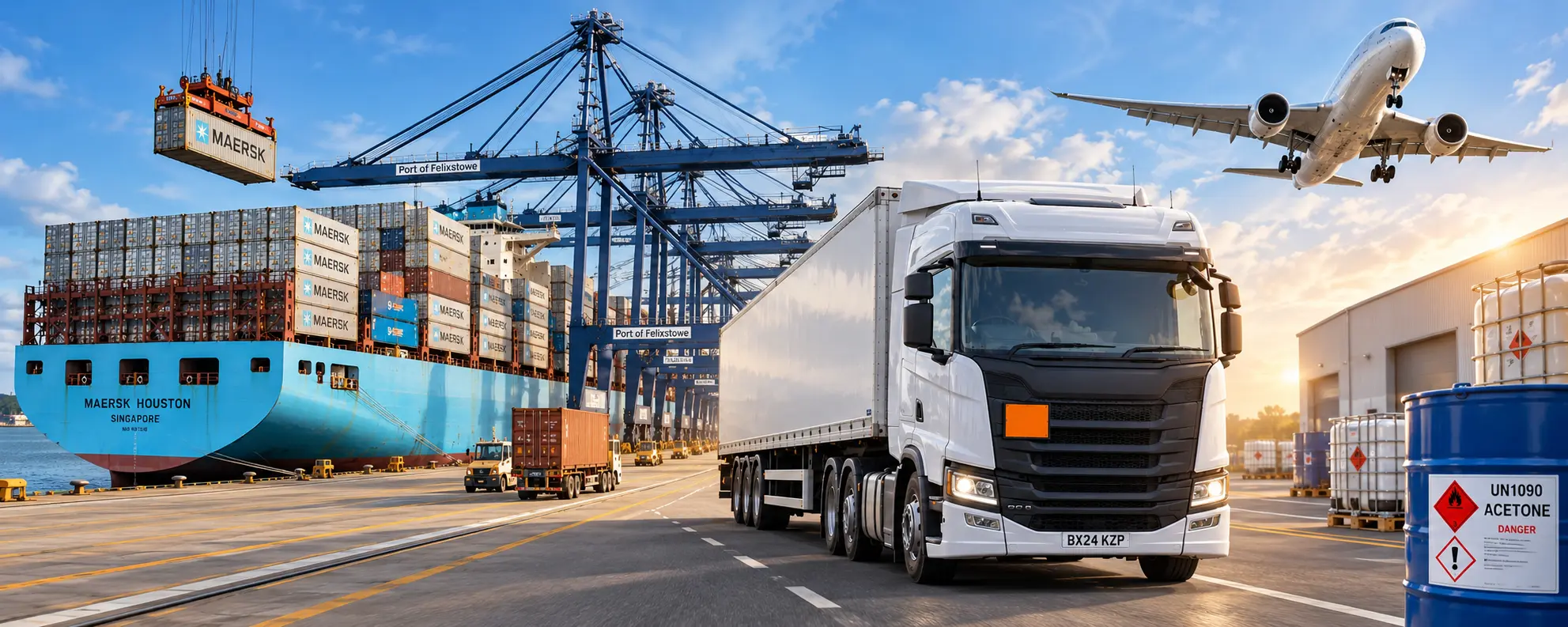
Multi-modal shipments are very common, Dangerous Goods rarely travel by only one mode. A consignment exported by air or sea will almost always begin or end its journey by road.
Although the underlying principles are similar, the detailed requirements for classification, packaging, marking, labelling and documentation can differ significantly between air, road and sea.
This course helps candidates understand both the common principles and the important differences between:
· The IATA Dangerous Goods Regulations and ICAO Technical Instructions for air transport
· ADR requirements for transport by road
· The International Maritime Dangerous Goods Code (IMDG) for transport by sea
Candidates learn how to identify which rules apply, locate the relevant information and prepare compliant consignments for each mode.
Additionally, as with all RoadSafe Europe courses, each trainee receives 12 months of complimentary post-course support. If you need clarification on something covered during your training, help finding the right information or guidance as you put your learning into practice, you are welcome to contact us.
COURSE STRUCTURE
Days 1–3: Dangerous Goods by Air — IATA/ICAO
The first three days comprise RoadSafe’s full CAA-approved Dangerous Goods by Air course.
Subjects include:
· Responsibilities of shippers and other parties
· Applicability and limitations
· Dangerous Goods classification
· UN numbers and Proper Shipping Names
· Packing Groups
· The Dangerous Goods List
· General and specific packing requirements
· Packing Instructions
· UN specification packaging
· Limited and Excepted Quantities
· Package marks and hazard labels
· Overpacks
· Shipper’s Declaration for Dangerous Goods
· Air Waybill information
· Recognition of hidden Dangerous Goods
· Safety and emergency procedures
· Practical shipment-preparation exercises
The air module concludes with the required assessment.
Day 4: Dangerous Goods by Road — ADR Consignor
The fourth day concentrates on the duties of organisations and personnel consigning Dangerous Goods for transport by road.
Subjects include:
· The structure and application of ADR
· Responsibilities of the consignor
· Classification and identification
· Using the ADR Dangerous Goods List
· Packaging requirements
· Marking and labelling packages
· Overpacks
· Limited and Excepted Quantities
· Exemptions and transport categories
· Preparing the ADR transport documents
· Vehicle marking and placarding implications
· Load compatibility and segregation
· Security awareness
· Emergency information
· Practical consignor exercises
The road module concludes with a separate assessment.
Day 5: Dangerous Goods by Sea — IMDG Consignor
The final day covers the requirements applying when Dangerous Goods are offered for transport by sea, including shipments travelling on ferries and ro-ro services.
Subjects include:
· The structure and application of the IMDG Code
· Responsibilities of the consignor
· Classification and identification
· Marine pollutants
· Using the IMDG Dangerous Goods List
· Packaging requirements
· Marking and labelling packages
· Limited and Excepted Quantities
· Container and vehicle marks and placards
· Stowage and segregation
· The Dangerous Goods Note
· Container/Vehicle Packing Certificate requirements
· Emergency and security provisions
· Practical consignor exercises
The sea module concludes with a separate assessment.
PRACTICAL MULTI-MODAL TRAINING
This is more than three sets of regulations presented one after another.
Throughout the course, candidates compare the requirements applying to the same consignment when it is transported by air, road or sea. Practical exercises demonstrate where the rules align and, more importantly, where they differ.
By the end of the week, successful candidates should be able to:
· Locate and interpret relevant information in each set of regulations
· Identify the requirements applying to a particular consignment
· Select appropriate packaging
· apply the correct marks and labels
· Prepare the required transport documentation
· Recognise important differences between air, road and sea
· Check a consignment before it is offered for transport
· Understand when specialist advice or further training is required
THREE SEPARATE CERTIFICATES
Candidates who successfully complete the relevant training and assessments receive:
1. A CAA-approved Dangerous Goods by Air certificate
2. An ADR Dangerous Goods Consignor training certificate
3. An IMDG Code Dangerous Goods Consignor training certificate
The three certificates are issued individually. This means candidates receive the same mode-specific evidence of training as they would have received by attending each course separately.
Candidates will also receive confirmation that the courses were completed together as part of the RoadSafe Dangerous Goods Master programme.
Please note that this programme provides function-specific training for people preparing and consigning dangerous goods. It is not an ADR driver-training course and does not provide an ADR driver card. It is also not a Dangerous Goods Safety Adviser qualification.
WHO SHOULD ATTEND?
The course is suitable for personnel who prepare, check, manage or arrange dangerous goods consignments moving by more than one mode, including:
· Dangerous-goods consignors and shippers
· Export and shipping personnel
· Freight forwarders
· Cargo agents
· Packers
· Warehouse and dispatch personnel
· Logistics and transport coordinators
· Compliance and health and safety personnel
· Supervisors and managers responsible for shipping operations
It is particularly valuable to manufacturers, exporters and logistics organisations whose consignments may travel by air or sea before or after a road journey.
ENTRY REQUIREMENTS
No previous dangerous-goods qualification is required for the initial course.
Candidates should have a reasonable standard of written English and be comfortable working with technical reference material. Please tell us in advance if a candidate requires additional learning or assessment support.
ASSESSMENT
Each transport mode is assessed separately. Candidates must meet the required standard for a particular mode before its certificate can be issued.
A candidate who does not pass one assessment may still receive certificates for the other modes successfully completed. RoadSafe will explain the available reassessment arrangements.
VALIDITY AND REFRESHER TRAINING
The Dangerous Goods by Air qualification requires recurrent training and assessment within 24 months.
ADR and IMDG training must be refreshed periodically and whenever changes to regulations, responsibilities or working practices affect the candidate’s duties.
RoadSafe recommends reviewing all three elements together every two years. This provides a convenient way to maintain the air qualification while updating knowledge of current road and sea requirements.
COURSE LIMITATIONS
The course covers the preparation and consignment of packaged dangerous goods within the scope of the programme.
It does not provide:
· An ADR driver-training certificate
· A Dangerous Goods Safety Adviser (DGSA) qualification
· Detailed radioactive-material training
· Training for every possible operational or carrier function
· Company-specific practical authorisation without any additional workplace assessment required by the employer
Please contact RoadSafe if you are unsure whether the course covers the products or responsibilities relevant to your organisation.
IN-HOUSE TRAINING
The Dangerous Goods Master can be delivered exclusively for your organisation at your own premises, and centred around your cargos.
In-house courses allow exercises and discussions to be tailored to your products, packaging, transport routes and working procedures. They can be particularly cost-effective where several employees require the same training.
Please contact us to discuss candidate numbers, facilities and course dates.
BOOKING AND FURTHER INFORMATION
If your organisation sends dangerous goods by air, road and sea, the RoadSafe Dangerous Goods Master provides an efficient way to complete all three courses during one carefully structured week.
For course dates, prices or in-house training enquiries:
Telephone: 02380 702576
Email: info@roadsafeeurope.com
Contact RoadSafe today to discuss your training requirements.