
The Radioactives Consignor
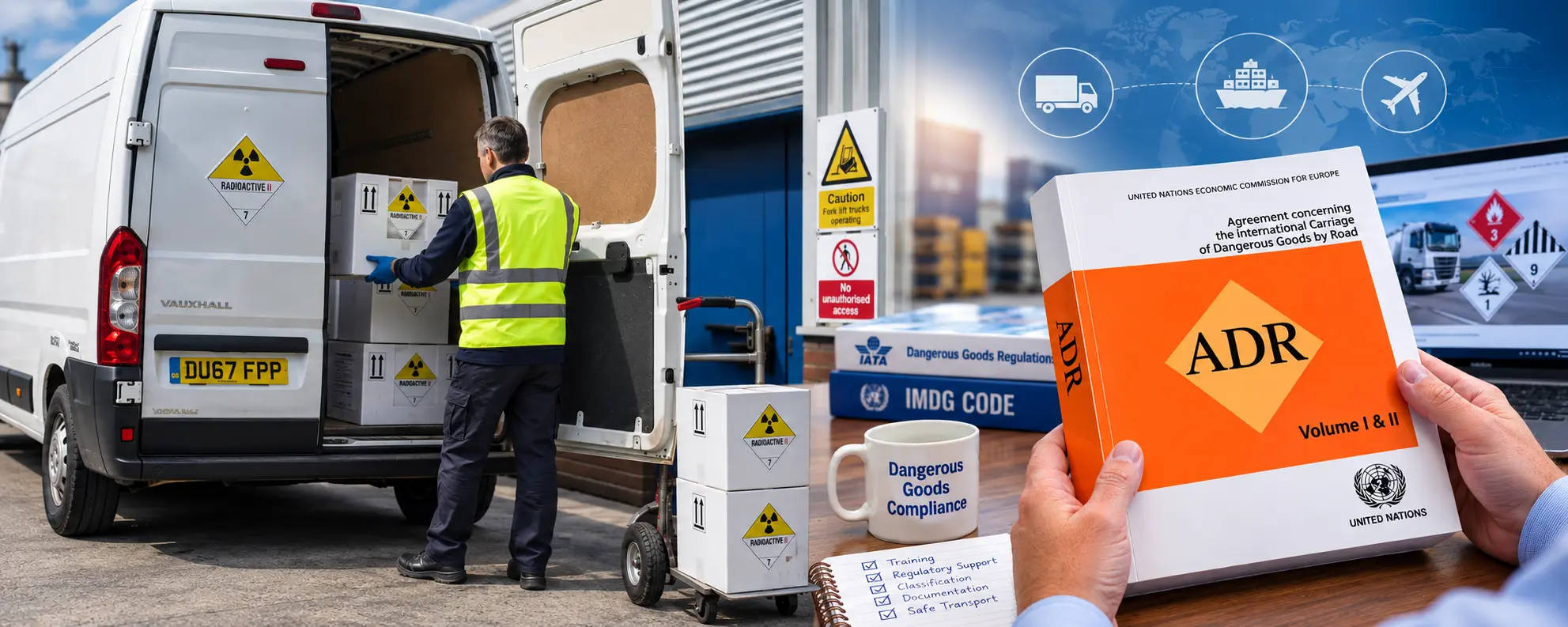
Radioactive Materials Consignor and Carrier Training
Specialist two-day training for personnel responsible for preparing and consigning radioactive materials for transport by road and sea.
The transport of radioactive material carries specialist legal, safety and operational responsibilities. Consignors and carriers must be able to classify material, select appropriate packages, prepare documentation and apply the correct marking, labelling, placarding, handling and emergency requirements.
RoadSafe Europe’s two-day course provides practical, function-specific training for personnel involved in consigning or carrying Class 7 radioactive material by road and sea.
The programme covers the applicable requirements of ADR, the UK Carriage of Dangerous Goods Regulations and the International Maritime Dangerous Goods Code.
· Per person: £495 + VAT
· In-house: From £1000 + VAT. Contact us for a per-course quotation.
Who should attend?
This course is suitable for personnel whose duties include preparing, offering, checking, carrying or coordinating radioactive-material consignments, including:
- Consignors and shippers of radioactive material
- Road carriers and transport operators
- Shipping lines, freight forwarders and logistics providers
- Port, terminal and shore-based personnel
- Packing, warehouse and dispatch staff
- Transport planners and compliance managers
- Hospital, healthcare and radiopharmacy personnel
- Nuclear-medicine departments
- Universities and research establishments
- Nuclear and energy-sector organisations
- Industrial radiography and non-destructive testing companies
- Radiation protection, dangerous goods and safety personnel
Training and assessment can be aligned with the delegate’s responsibilities as a consignor, carrier or member of shore-based personnel.
What will you learn?
Following successful completion, delegates should be able to apply the Class 7 requirements relevant to their work.
Consignor responsibilities
Delegates undertaking consignor functions will learn how to:
- Determine whether radioactive material is subject to transport regulations
- Classify radioactive material correctly
- Identify the appropriate UN number and proper shipping name
- Use activity limits and relevant A1 and A2 values
- Select the appropriate package type
- Assign the correct package category
- Calculate and apply the Transport Index
- Apply the Criticality Safety Index where relevant
- Prepare packages and overpacks
- Apply the correct marks and Class 7 labels
- Prepare road and sea transport documentation
- Identify when competent-authority approval is required
- Check relevant restrictions and special provisions
Carrier responsibilities
Delegates undertaking carrier functions will learn how to:
- Check packages and documentation before transport
- Confirm that packages are appropriately marked and labelled
- Apply vehicle, container and cargo transport unit marking requirements
- Understand Transport Index and Criticality Safety Index limits
- Apply segregation, stowage and handling requirements
- Check vehicle and transport equipment requirements
- Identify damaged, leaking or non-compliant packages
- Follow security, supervision and parking requirements
- Apply emergency arrangements
- Report incidents and occurrences appropriately
Course content
The two-day programme includes:
- The regulatory framework for Class 7 transport
- The relationship between ADR, UK legislation, the IMDG Code and IAEA requirements
- Responsibilities of consignors, carriers, packers, loaders and other parties
- Basic principles of radioactivity and ionising radiation
- Radiation-protection principles, including time, distance and shielding
- Applicability, exemptions and regulatory thresholds
- Classification of radioactive material
- Radionuclide activity limits
- A1 and A2 values
- Low Specific Activity material
- Surface Contaminated Objects
- Special-form radioactive material
- Fissile and fissile-excepted material
- Excepted packages
- Industrial packages
- Type A, Type B and Type C packages
- Package approval and testing requirements
- Package categories I-WHITE, II-YELLOW and III-YELLOW
- Transport Index calculations
- Criticality Safety Index requirements
- Exclusive-use consignments
- Package and overpack marking
- Class 7 labels
- Vehicle, container and cargo transport unit placarding
- Orange-coloured plate requirements for road transport
- Road transport documents
- Dangerous goods declarations for sea transport
- Container and vehicle packing certificates
- Segregation, stowage, handling and loading
- Security requirements
- Radiation Protection Programmes
- Quality management requirements
- Emergency and contingency arrangements
- Incident and occurrence reporting
- Practical exercises based on realistic consignments
Road transport requirements
The road element covers the relevant provisions of ADR and the Carriage of Dangerous Goods and Use of Transportable Pressure Equipment Regulations.
Delegates learn how the requirements apply to the complete road movement, including:
- Consignor and carrier duties
- Transport documentation
- Package and overpack checks
- Vehicle marking and placarding
- Orange-coloured plates
- Instructions in writing
- Vehicle equipment
- Loading, unloading and securing
- Segregation from persons and other cargo
- Supervision, parking and routing considerations
- Security provisions
- Emergency planning and response
The course also explains when an ADR-qualified Class 7 driver is required and how the driver’s responsibilities differ from those of the consignor and carrier organisation.
Sea transport requirements
The sea element covers the International Maritime Dangerous Goods Code and the responsibilities of shore-based personnel involved in radioactive-material shipments.
Subjects include:
- Classification under the IMDG Code
- Marine transport documentation
- Package marking and labelling
- Placarding of freight containers and cargo transport units
- Container and vehicle packing certificates
- Segregation and stowage
- Handling at ports and terminals
- Carrier acceptance checks
- Shipboard and shore-side emergency information
- Security requirements
- The transfer between road and sea transport
The course is based on IMDG Code Amendment 42-24, mandatory from 1 January 2026.
Practical, function-specific training, not purely theoretical
The course includes practical exercises that require delegates to apply the regulations to realistic road and sea consignments.
Exercises may include:
- Selecting the correct UN entry
- Using radionuclide activity limits
- Identifying a suitable package type
- Calculating a Transport Index
- Assigning a package category
- Applying package marks and labels
- Preparing a road transport document
- Completing sea-transport documentation
- Checking a package and its paperwork
- Applying vehicle and container placards
- Identifying and correcting compliance errors
- Responding to a damaged package or transport incident
Assessment and certification
Delegates complete an assessment covering the duties relevant to their role.
Successful candidates receive a RoadSafe Europe certificate recording completion of Class 7 consignor and carrier training for road and sea transport.
Employers remain responsible for ensuring that training is appropriate to each employee’s functions and that competence is maintained. Refresher training should be provided periodically and whenever regulatory changes, new duties or changes in working practices make additional training necessary.
Course format
- Duration: Two days
- Subject: Class 7 radioactive material
- Transport modes: Road and sea
- Regulatory coverage: ADR, UK carriage legislation and the IMDG Code
- Training level: Function-specific consignor and carrier training
- Delivery: Instructor-led
- Assessment: Written and practical assessment
- Course materials: Included
- Locations: RoadSafe’s Southampton training centre or your premises nationwide
Important course scope
This course provides function-specific training for personnel involved in consigning and carrying radioactive material. It is not an ADR driver qualification.
Drivers who carry Class 7 radioactive material above the applicable thresholds may require a separate DVSA-approved ADR driver-training course and examination.
The course is also not a Dangerous Goods Safety Adviser qualification, although it may provide useful specialist development for DGSAs whose work involves Class 7 material.
Please speak to RoadSafe Europe if you are unsure which qualifications or training requirements apply to your personnel.
Who should attend?
Ideal for:
- radioactive-material consignors;
- Small-load drivers;
- laboratory staff;
- University research departments;
- NHS and healthcare organisations;
- pharmaceutical companies;
- nuclear-sector organisations;
- radioactive-material manufacturers;
- specialist logistics companies;
- dangerous-goods coordinators;
- shipping and export personnel.
No previous ADR Class 7 qualification is required, although delegates should have a basic understanding of the radioactive materials handled by their organisation.
On-site training for your organisation
RoadSafe Europe can deliver this course exclusively for your organisation at your premises anywhere in the UK.
An in-company course enables examples and exercises to fully reflect your operations, including the radionuclides, packages, vehicles, shipping routes and documentation encountered by your personnel.
We can also review your delegates’ functions before the course to help ensure that the training addresses their responsibilities.
Book your Class 7 consignor and carrier course
Give your personnel the specialist knowledge needed to prepare and transport radioactive-material consignments safely and compliantly by road and sea.
Call RoadSafe Europe on 02380 702576, email info@roadsafeeurope.com, or contact us through the website using the button below for available dates and a quotation.