
Dangerous Goods by Sea — IMDG Consignor
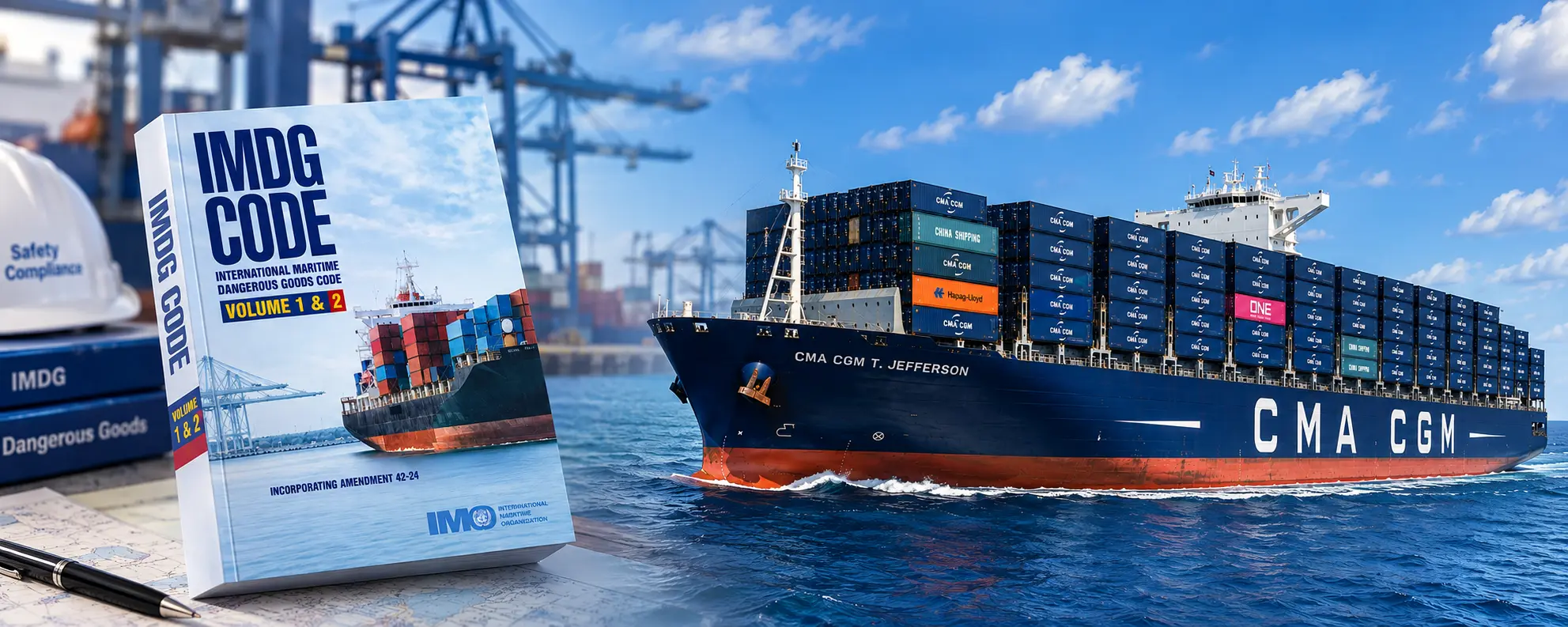
IMDG Code Dangerous Goods Training for Shore-Based Consignors
Two-day function specific training for Dangerous Goods transported by sea.
Learn how to correctly prepare, document, pack, mark, label, segregate and offer a Dangerous Goods consignment for sea transport.
· Per-person: £525 + VAT
· In-house: From £1000 + VAT. Contact us for a per-course quotation.
RoadSafe Europe’s two-day IMDG Code course gives shore-based personnel the knowledge and practical skills needed to prepare, document, handle and offer Dangerous Goods for transport by sea.
The course is based on the current International Maritime Dangerous Goods Code and is tailored to the responsibilities of the personnel attending. It combines instruction in using the Code with practical exercises covering classification, packaging, marking, labelling, documentation, container packing, stowage and segregation.
Course details
- Duration: Two days
- Regulations: Latest IMDG Code 2026 Edition incorporating Amendment 43-26
- Delivery: Southampton or at your premises throughout the UK
- Format: Instructor-led classroom training
- Course level: General awareness and function-specific training
- Assessment: Knowledge checks and practical exercises
- Certification: Function-specific Certificate of Training
Who should attend
The IMDG Code requires shore-based personnel involved in transporting Dangerous Goods by sea to receive training appropriate to their responsibilities.
This course may be suitable for personnel who:
- Classify Dangerous Goods
- Select Proper Shipping Names
- Pack Dangerous Goods
- Mark or label packages
- Prepare or check Dangerous Goods Notes
- Offer Dangerous Goods for sea transport
- Accept dangerous goods for transport
- Pack or unpack containers and vehicles
- Load or unload cargo transport units
- Plan the stowage or segregation of Dangerous Goods
- Work in freight forwarding, shipping or port operations
- Inspect Dangerous Goods consignments for compliance
- Supervise employees performing these functions
Training requirements should be based on the functions an employee performs rather than their job title alone.
Why is IMDG training required?
The IMDG Code requires shore-based personnel to be trained before assuming responsibilities involving dangerous goods transport.
Employers and other organisations engaging shore-based personnel must determine:
- Which employees require training
- The functions those employees perform
- The level and content of training required
- How the training will be delivered
- How competence and training records will be maintained
Employees who have not yet received the necessary training should perform Dangerous Goods functions only under the direct supervision of a trained person.
Training must be periodically supplemented to reflect changes in the regulations, working practices and the employee’s responsibilities.
Course content
The course provides a structured introduction to the IMDG Code and its practical application.
The IMDG Code indicates certain subjects that must be covered, but doesn’t include a set syllabus. So, subjects can include:
Regulatory framework
- Purpose and application of the IMDG Code
- Responsibilities within the transport chain
- Structure and layout of the Code
- Using Volumes 1 and 2 (and an introduction to Volume 3 – The Supplement)
- Application of the IMDG Code to international and domestic sea journeys
- Connections with road and rail transport requirements
Classification and identification
- The nine Dangerous Goods hazard classes
- Subsidiary hazards
- UN numbers
- Proper Shipping Names
- Packing groups
- Marine pollutants
- Mixtures and solutions
- Generic and not otherwise specified entries
- The Dangerous Goods List
- Special Provisions
Packaging requirements
- General packaging provisions
- UN specification packaging
- Packing instructions
- Combination and single packaging
- Intermediate bulk containers
- Overpacks
- Mixed packing
- Limited Quantities
- Excepted Quantities
- Checking package suitability and condition
Marking and labelling
- UN numbers and Proper Shipping Names
- Hazard and subsidiary-risk labels
- Marine pollutant marks
- Limited Quantity marks
- Orientation arrows
- Overpack marks
- Environmentally hazardous substances
- Marks for cargo transport units, containers and vehicles
Documentation
- Information required on dangerous goods transport documents
- Completion and checking of the Dangerous Goods Note
- Container or vehicle packing certificates
- Describing dangerous goods in the correct sequence
- Additional information required for particular substances
- Retention and availability of documentation
- Recognising common documentation errors
Container packing and cargo operations
- Responsibilities of packers, loaders and operators
- Inspecting packages before loading
- Checking cargo transport units
- Safe loading and unloading
- Securing dangerous goods
- Segregation of incompatible substances
- Foodstuff separation requirements
- Placarding and marking containers and vehicles
- Closed cargo transport units
- Fumigated cargo transport units where relevant
Stowage and segregation
- Stowage categories and handling codes
- Segregation groups
- Using the segregation table
- Applying individual segregation provisions
- Understanding terms such as away from and separated from
- Identifying substances that must not be packed or stowed together
Safety and emergency awareness
- Hazards presented by dangerous goods
- Safe handling procedures
- Personal protective equipment
- Damaged or leaking packages
- Spill and fire response
- Emergency schedules
- Medical first-aid guidance
- Incident reporting
- Following company emergency procedures
Security awareness
- Security risks involving dangerous goods
- Protecting dangerous goods during storage and transport
- Access control
- Recognising suspicious activity
- Reporting a potential security breach
- Responsibilities involving high-consequence dangerous goods
Practical exercises
Delegates will practise using the IMDG Code to solve realistic transport problems.
Exercises can include:
- Finding an entry in the Dangerous Goods List
- Selecting a Proper Shipping Name
- Identifying applicable special provisions
- Selecting suitable packaging
- Determining marks and labels
- Preparing or checking a Dangerous Goods Note
- Applying container placarding requirements
- Checking stowage and segregation
- Identifying errors in a prepared consignment
Where possible, examples can be adapted to the dangerous goods and transport activities encountered within your organisation.
What delegates will learn
After completing the course, delegates should be able to:
- Navigate the IMDG Code efficiently
- Identify the requirements relevant to their responsibilities
- Find and interpret Dangerous Goods List entries
- Apply relevant classification and packaging provisions
- Determine the marks and labels required on packages
- Prepare or check dangerous goods documentation
- Apply container and vehicle marking requirements
- Identify basic stowage and segregation restrictions
- Recognise common compliance problems
- Follow appropriate safety, emergency and security procedures
- Know when specialist advice is required
The precise learning outcomes recorded for each delegate will reflect the functions covered during the course.
Assessment and certification
Knowledge checks and practical exercises are used throughout the course to confirm understanding.
A formal written assessment can also be included where required by the employer. The IMDG Code does not prescribe a universal examination or pass mark for shore-based personnel, so the assessment can be matched to the functions covered by the training.
Each delegate receives a traceable certificate stating the dangerous goods functions for which training was provided. The certificate can be retained as part of the employer’s training records.
Initial and refresher training
The course can be used for initial or refresher training, provided its content is appropriate to the delegates’ responsibilities and previous experience.
The IMDG Code does not apply one fixed expiry date to all shore-based personnel training. Employers must periodically supplement training to account for changes in regulations and practice.
Additional or refresher training should be considered when:
- A new edition or amendment of the IMDG Code applies
- An employee’s duties change
- New Dangerous Goods are introduced
- Company procedures or equipment change
- An incident or audit identifies a training need
- An employee has not performed the relevant function regularly
Training at your premises
RoadSafe Europe can deliver this course at your premises anywhere in the UK.
On-site training allows the course to reflect your:
- Dangerous Goods
- Transport activities
- Documentation
- Packaging and cargo transport units
- Company procedures
- Customer or carrier requirements
- Previous incidents or compliance concerns
It also allows several employees to be trained together while reducing travel and time away from the workplace.
Courses are also available at our Southampton training centre, close to one of the UK’s principal container ports.
Is this the right course?
This course is intended for shore-based personnel who require practical, function-specific knowledge of the IMDG Code.
Employees who only need a basic introduction may be better suited to a shorter awareness course. Personnel with responsibilities involving radioactive materials, explosives or other specialist operations may require additional training.
Contact us if you would like help assessing the training required for a particular role.
Book an IMDG Code Consignor course
To discuss course dates, delegate responsibilities or training at your premises, contact RoadSafe Europe:
Telephone: 02380 702576
Email: info@roadsafeeurope.com
We will confirm the appropriate course content and provide a quotation based on your requirements.