
Dangerous Goods Shipping Documentation Master
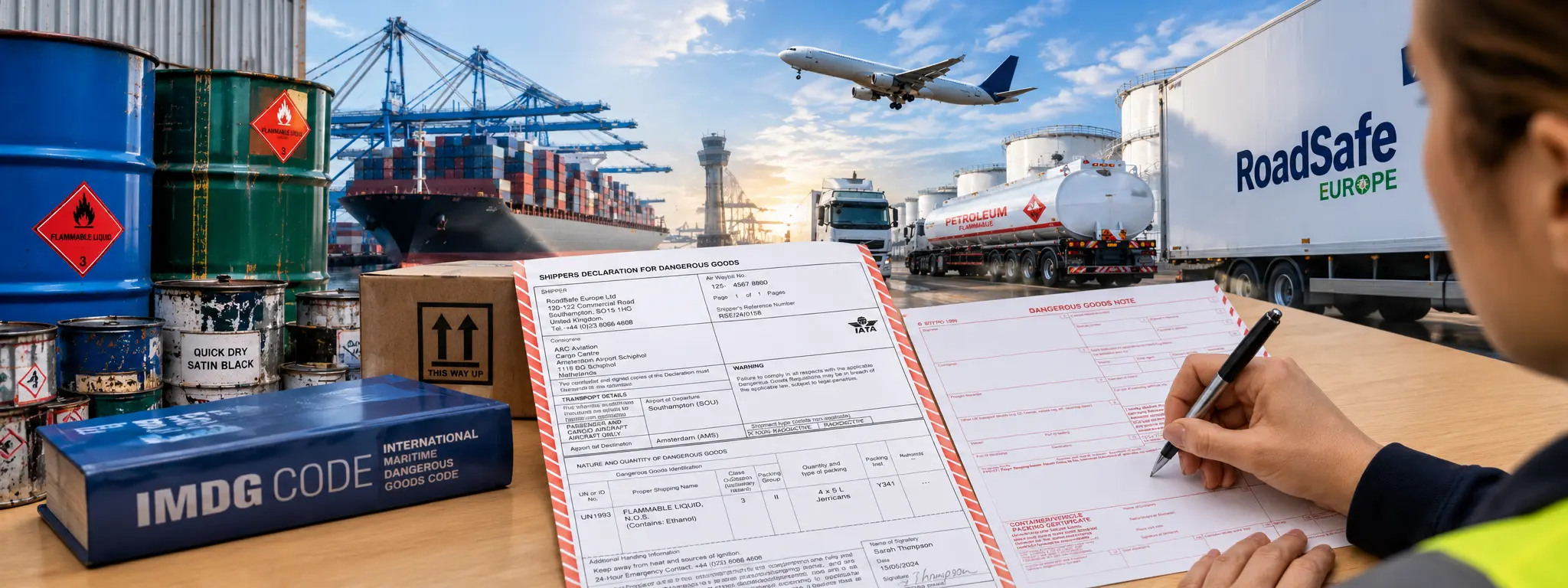
Dangerous Goods Documentation Masterclass
One-day course
· Per person: £295 + VAT
· In-house: From £500 + VAT. Contact us for a per-course quotation
Reduce paperwork errors that can lead to shipment delays or carrier rejection.
A highly practical course for people who prepare, check or process Dangerous Goods shipping documents. Work through documentation used for road, sea and air transport, and learn how to spot common errors before a shipment is handed over, and how to extract and interpret the required information from Safety Data Sheets.
Each mode of transport has slightly different documentation requirements, and errors on those documents is one of the most common reasons for rejections – costing you time, money and frustration.
Suitable for shippers, consignors, exporters, freight forwarders, warehouse and shipping staff, and others involved in preparing or checking dangerous goods documentation - for carriage in packages, bulk or tanks.
Course content
Road and/or Rail Transport Documents
Review ADR and/or RID Transport Documents and the information needed to describe Dangerous Goods for carriage by road and rail, including tunnel codes.
Understand the importance and use of the ADR Instructions in Writing.
Sea freight documentation
Explore IMDG Dangerous Goods Notes (DGNs) and Container/Vehicle Packing Certificates, including how the paperwork supports safe transport by sea, and the additional requirements for information such as flash points and marine pollutants.
Air freight documentation
Work through the Shipper’s Declaration for Dangerous Goods and the Air Waybill, and understand how each document fits into the shipping process.
Multi-modal and electronic documentation
Consider how Dangerous Goods information is carried across different transport modes and what to check when documents or data are exchanged electronically.
Common errors and carrier rejection
Use practical examples to identify missing, inconsistent or incorrect information. Work through document checks that can help catch problems before a carrier rejects or delays a shipment.
What participants will gain
By the end of the course, participants should be better equipped to prepare or review dangerous goods shipping documents, check that information is consistent across the paperwork, and recognise common issues before dispatch.
We encourage trainees to bring in real-world examples of the goods they usually encounter – there’s nothing more valuable than leaving a course with a template that can be applied at work the next day.
The course is highly practical and focused on documentation workflows. Requirements vary by transport mode and shipment, so participants should apply the relevant current regulations, carrier requirements and workplace procedures.
For course dates, availability or booking information, contact us.